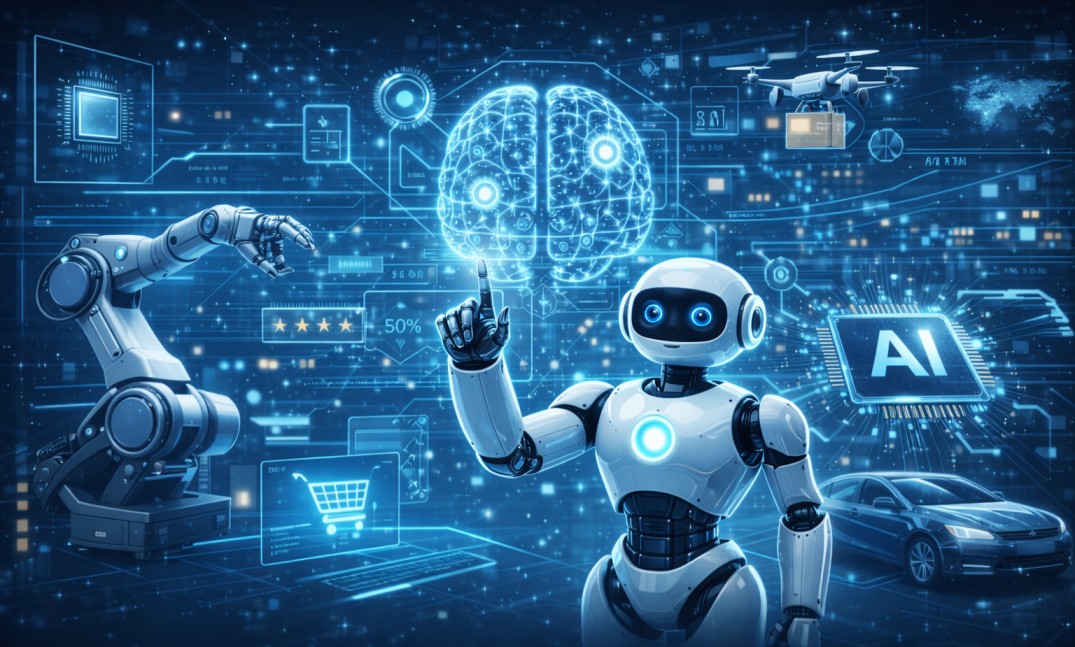
Robotics and artificial intelligence (AI) are no longer experimental technologies. They are now central to modern innovation, reshaping industries and redefining how tasks are performed. By combining physical machines with intelligent software, robotics and AI enable systems that can perceive, decide, and act with minimal human intervention.
This convergence is driving efficiency, accuracy, and scalability across multiple sectors.
Understanding Robotics and AI
Robotics focuses on designing machines capable of performing physical tasks, while artificial intelligence provides the decision-making capabilities that guide those machines. Together, they create systems that can:
Sense their environment
Analyze data
Make decisions
Execute actions autonomously
AI transforms robots from programmable tools into adaptive systems.
How AI Is Advancing Robotics
Traditional robots follow fixed instructions. AI-powered robots, however, can:
Learn from experience
Adjust to changing environments
Recognize patterns and objects
Improve performance over time
Machine learning, computer vision, and natural language processing allow robots to operate with greater flexibility and intelligence.
Key Applications of Robotics and AI
Manufacturing and Industrial Automation
AI-driven robots perform assembly, quality inspection, and equipment maintenance. They increase productivity while reducing errors and downtime.
Healthcare and Medical Robotics
Robots assist in surgery, diagnostics, and patient care. AI enhances precision, supports decision-making, and improves treatment outcomes.
Logistics and Warehousing
Autonomous robots manage inventory, sort packages, and optimize delivery routes. This reduces operational costs and improves efficiency.
Agriculture and Food Production
AI-powered robots monitor crops, automate harvesting, and optimize resource usage. These systems support sustainable farming and increased yields.
Service and Consumer Robotics
From automated customer support machines to household robots, AI enhances interaction, responsiveness, and adaptability.
Benefits of Robotics and AI
The integration of robotics and AI delivers several advantages:
Increased efficiency and productivity
Reduced human error
Improved safety in hazardous environments
Consistent performance at scale
These benefits make intelligent automation attractive to both large enterprises and small businesses.
Challenges and Ethical Considerations
Despite their advantages, robotics and AI present challenges:
High development and deployment costs
Workforce displacement concerns
Data privacy and security risks
Ethical questions around autonomy and decision-making
Responsible implementation and regulation are essential to address these issues.
The Impact on Jobs and Skills
Robotics and AI are transforming the job market. Routine tasks are increasingly automated, while demand grows for roles in system design, maintenance, data analysis, and oversight.
Upskilling and education will play a critical role in workforce adaptation.
The Future of Robotics and AI
The future points toward greater collaboration between humans and machines. Advances in AI models, sensors, and computing power will lead to more capable and affordable robots.
Robotics and AI will continue expanding into everyday life, supporting decision-making, improving productivity, and enhancing service delivery.
Conclusion
Robotics and artificial intelligence are shaping the next phase of technological progress. By combining physical automation with intelligent decision-making, these technologies are transforming industries and redefining efficiency.
As adoption grows, the focus will shift toward responsible use, security, and collaboration between humans and intelligent machines.